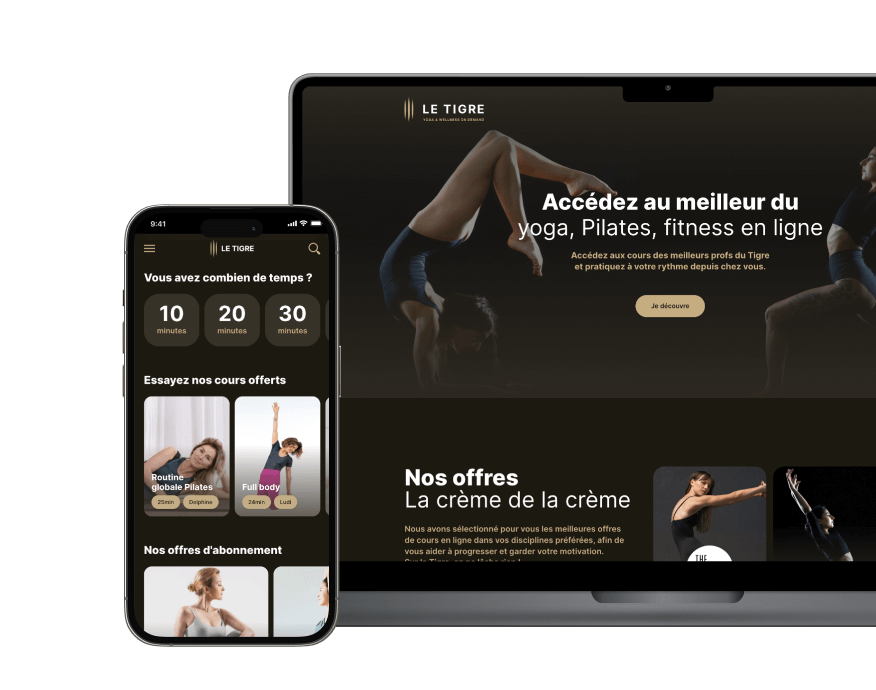
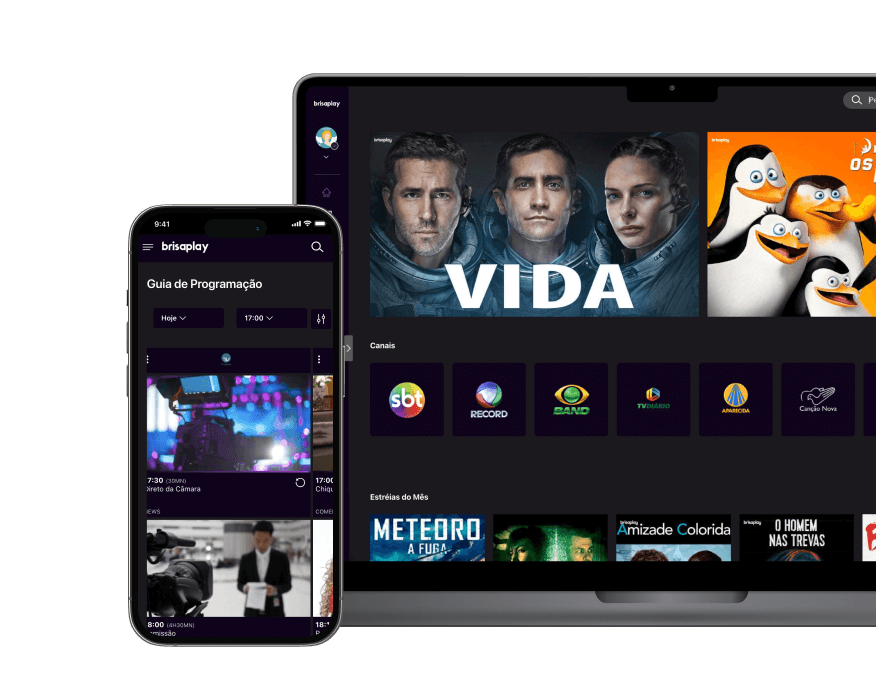
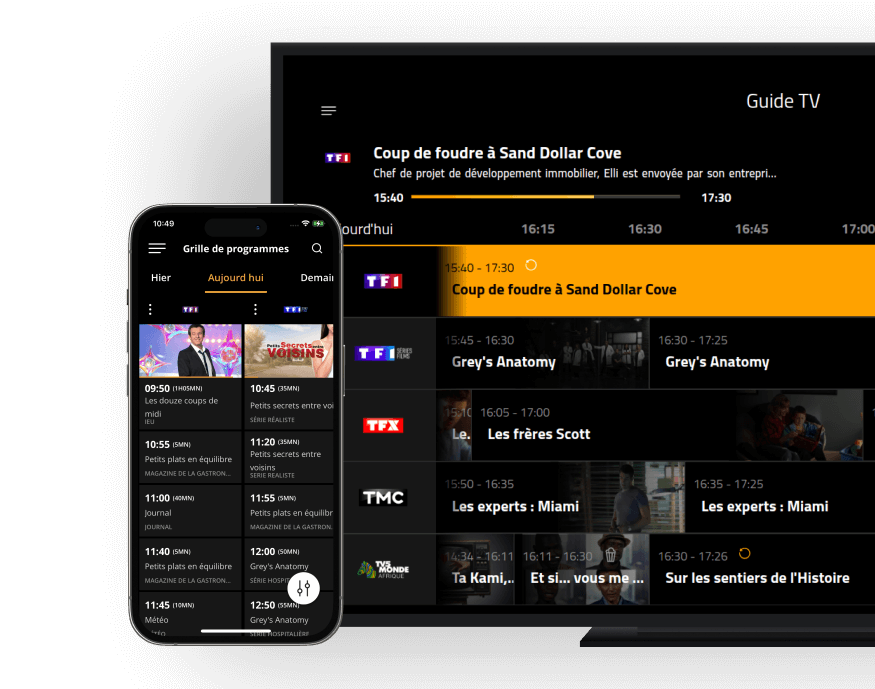
The increase and development in new screens (PCs, tablets & smart phones) gives rise to new usages that impact the viewing of audiovisual programmes and the manner in which more and more people watch television.
This phenomenon of convergence between mobile screens and the television world constitutes a growing demand from our clients (television channels, VOD platforms and telecoms operators). This is a key focus of Hubee in our development of innovation projects in 2011-2012 and is an increasingly important element in the products and services that we develop.
In terms of advice and the development of applications or services, here are four examples of usage upon which we are focusing.
1- Mobile television
A growing number of TV viewers watch television on alternative screens.
In fact, more than 20% of French people have already watched a live programme on their computer, tablet or smart phone. This figure reaches 40% when it is a question of the younger generation under 25 years of age who watch television even more frequently on these new vehicles (source: Mediamétrie – Sept 2011).
Solution : Hubee helps the channels or entertainment providers to distribute their content to these new screens by adapting the user experience, ergonomics and technical development to the specific features of this type of viewing.
We are convinced that more and more TV programmes will be developed for interactive applications with a view to recruiting and building loyalty among new audiences both on tablets and connected TVs. This is an example of the type of application that we can offer you.
2- The second screen
Social TV is already a reality and will, without a doubt, represent a groundswell trend in the televisual experience over the next ten years.
79% of young persons surf Facebook whilst watching television.
42% of adults surfing social networks whilst watching the television, do so in order to comment on the programme they are watching.
22% of Internet users in the UK are fans of their favourite television programmes on Facebook and this proportion rises to 57% for 18-24 year olds. (Source: Yougov-Deloitte UK study).
In addition to sharing and leaving recommendations concerning a programme, real time dialogue via Twitter appears to be exponential.
In September 2011, France Télévision recorded more than 85,000 followers, a 160% increase in just one year! (source: NPA)
Solution : One of the priorities of our technical and R&D team is the development of solutions and expertise focusing on the use of Social TV on a second screen (smart phone or tablet) or during a TV programme broadcast in synchronised interaction with clickable events on a mobile device.
The same applies for the viewing of a TV broadcast (programme, film, talk show) enhanced by interactive services (voting, e-commerce, access to additional information, statistics, and so on) either via HbbTV or Widget TV, or through parallel information transmitted synchronously to a tablet screen (iOS or Android).
3- The intelligent tablet-remote control
Using a smart phone or tablet as a remote control for a connected TV or a set-top box opens up innumerable possibilities and compensates for the absence of a keyboard and mouse during interactive browsing.
Two examples, amongst others, illustrate the evolution of the traditional remote control and the field of applications allowing for intelligent TV viewing and interaction with the set-top box:
Free with the Freemote and the Freebox control (see screen shots (1) and (2) opposite)
These different applications notably allow you:
- to use the smart phone as a virtual remote control
- to access the programme guide
- to programme a recording
- to send photos from your iPad to the set-top box
- to have a virtual keyboard for the Web browser
Samsung TV Remote (see screen shot (3) opposite)
With a Samsung smart phone or a Galaxy Tab, using a free Android application, the TV viewer can take control remotely of their Wi-Fi equipped television.
This application enables the TV viewer to change channels, control the volume, browse through the menus and even switch between different sources (DVD player, home cinema amplifier, game console, etc.).
Solution : The major advantage of this “virtual remote” application is that it allows the user to browse and type using the smart phone’s virtual keyboard. These apps are destined to be developed by every manufacturer and operator. They allow you to enhance the traditional television experience with improved interactivity and to design optimised dialogue, sharing and transaction functions (searching, recommending, chatting, purchasing through the television, etc.).
This is one of the major key areas for our teams of developers as they aim to combine perfect ergonomics for browsing, user-friendliness (for the general public), and compatibility /adaptability with the different SDKs of manufacturers of consumer electronic appliances and set-top boxes.
4- VOD Tablet
The tablet, the mobile tool par excellence, even when it is used in the home (in 60% of cases), is becoming an important screen for viewing films via VOD or audiovisual programmes via catch-up.
63% of French users claim to watch videos on their tablet (source: Les Echos/Fullsix – Sept 2011)
When compared to today’s experience of viewing on connected TV, using a tablet to view a VOD service allows for more control when browsing, a faster search within a voluminous film catalogue and a simpler connection and transaction with the service.
Solution : As the French specialist in VOD and catch-up TV, Hubee currently proposes to help all of our clients in rolling out their non-linear offering by developing and adapting their VOD service or catch-up TV to the new screens associated with smart phones and especially tablets (running Android and iOS).
We are certainly one of the most advanced companies, notably in terms of distribution, secure streaming (DRM) and online payment, all issues that still pose real problems on this type of device.